
Bible Journaling for Beginners: How I Read, Study, and Journal the Bible
If you’re new to Bible journaling and feel a little unsure of where to jump in, you’re in good company! Keep reading to see how I started as a newbie, created my own system, and landed on the best ways to help me study and absorb Scripture. Free printable Bible tip-out, too!
How to Bible Journal for Beginners (from One Newbie to Another)
I feel like I’m usually late to the game when it comes to trends. Not that I want to lump ‘Bible journaling’ in with trends, but this concept was introduced probably about 10 years ago (maybe more?), and I just recently jumped in.
To be fully transparent, I felt really overwhelmed the more I looked at what everyone else was doing. I knew I wanted Bible journaling to enhance my time with God, but I also knew there was the temptation for my time with God to be all about my journaling. Does that make sense?
For me personally, I needed to come up with something that would actually help me study the Bible as opposed to just making my Bible pretty (not that there’s anything wrong with that!).
So today, I’m sharing examples of what I do inside my Bible as part of my Bible journaling. This will NOT cover how to start a Bible journal notebook. For me, that’s a separate piece in addition to my quiet time. For Bible journal notebook ideas, head over here to this post!
If you’re looking for Bible journal aesthetic ideas – for both Bible and notebook – head here!
At the end of this post, I’ll also share a Bible study template free printable that I hope will give you a little structure if your goal is to study the Bible, too. I hope you find this Bible study inspo helpful!
Why I Started Bible Journaling
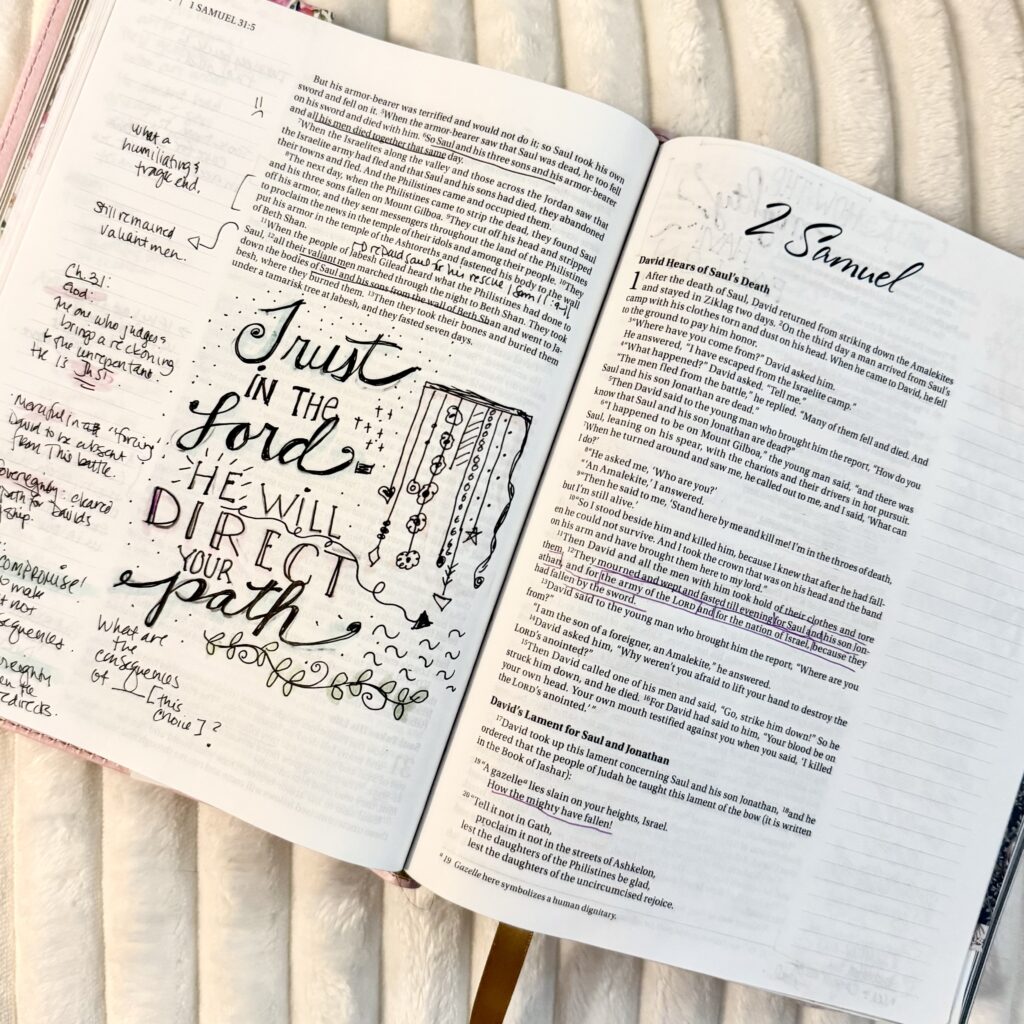
The reason I started Bible journaling is because I wanted to have my notes inside my Bible, not in a separate book. I like flipping through my Bible in real time and seeing what God revealed to me right on those very pages.
If I have to go find a particular page in a particular journal, it just adds too many extra steps. Now, I also have what I call a ‘faith art journal,’ which often does incorporate some of the things I’m learning from my Bible study time – but it’s not exclusively tied to my Bible study, if that makes sense.
So my goal for my Bible journaling process isn’t necessarily to decorate my Bible but to organize my notes, as well as to include Bible art and doodles because that helps me remember concepts better.
Using doodles as well as color helps the ideas jump off the page, which solidifies those truths even more. And I do like it to look a little pretty, too. 😉
If you want to use your Bible to journal your notes and what God is speaking to you – as well as add some pretty things along the way – small stickers, drawings, etc. – this is for you!
Bible Journaling for Beginners: Ideas to Get You Started
This post contains affiliate links. See Disclosures for details.
First, let’s talk about materials.
Materials Needed
Really, all you need is a Bible, paper, pens, and highlighters to Bible journal. I also recommend washi tape if you’re going to attach paper to your Bible. You can absolutely get more fancy if you want to – but those are the basics.
I’ll share with you what I personally use, and you can adapt that to what you need.
Journaling Bible
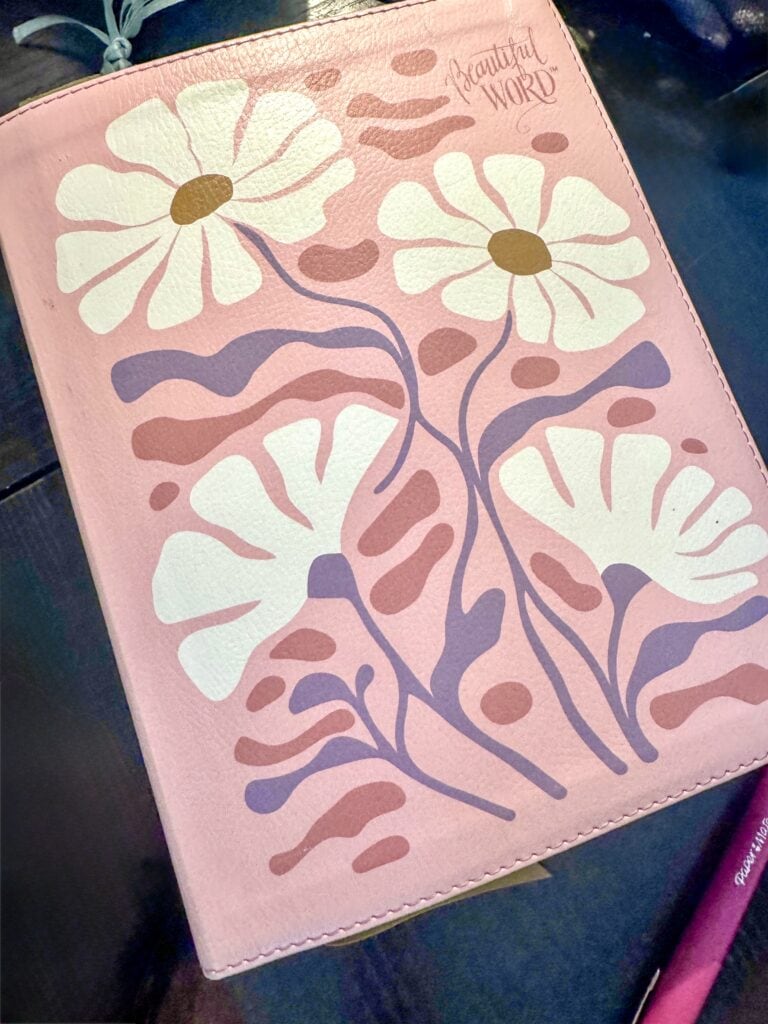
A journaling Bible is one that has wider margins, usually 2″, to give you more space. Some include coloring designs, like The Beautiful Word Coloring Bible, which is the one I purchased.
This is a great option if you want art and pictures in your Bible, but you’re nervous about drawing in it, or you aren’t confident in your art skills! There’s still plenty of space for you to draw or take notes.
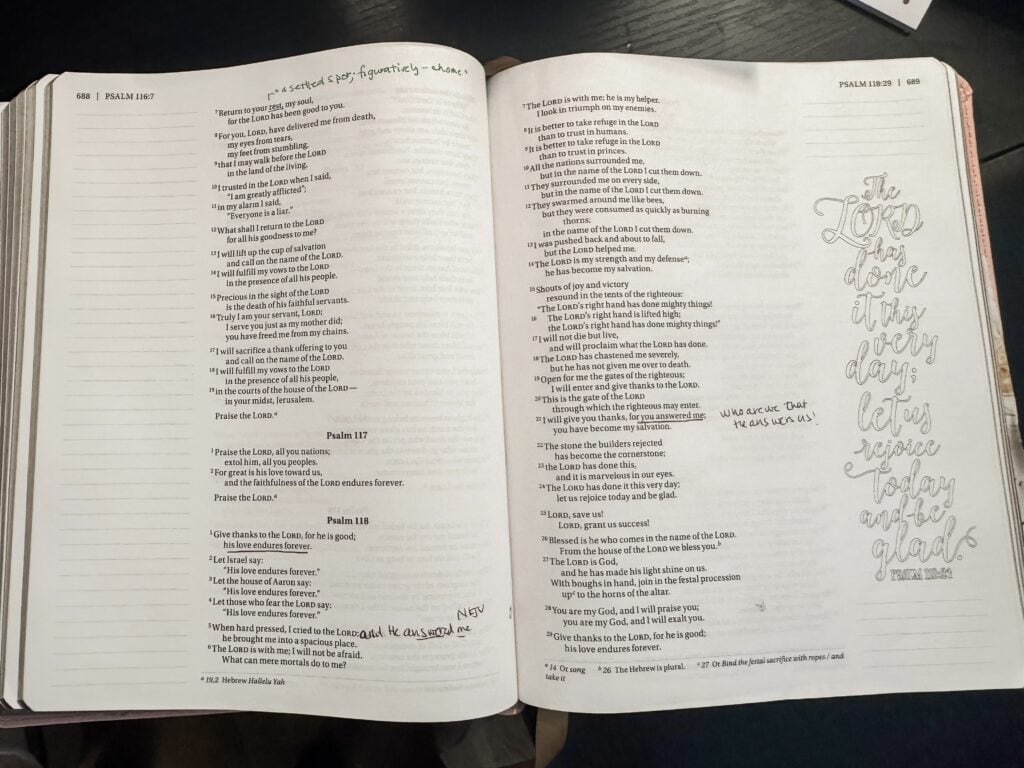
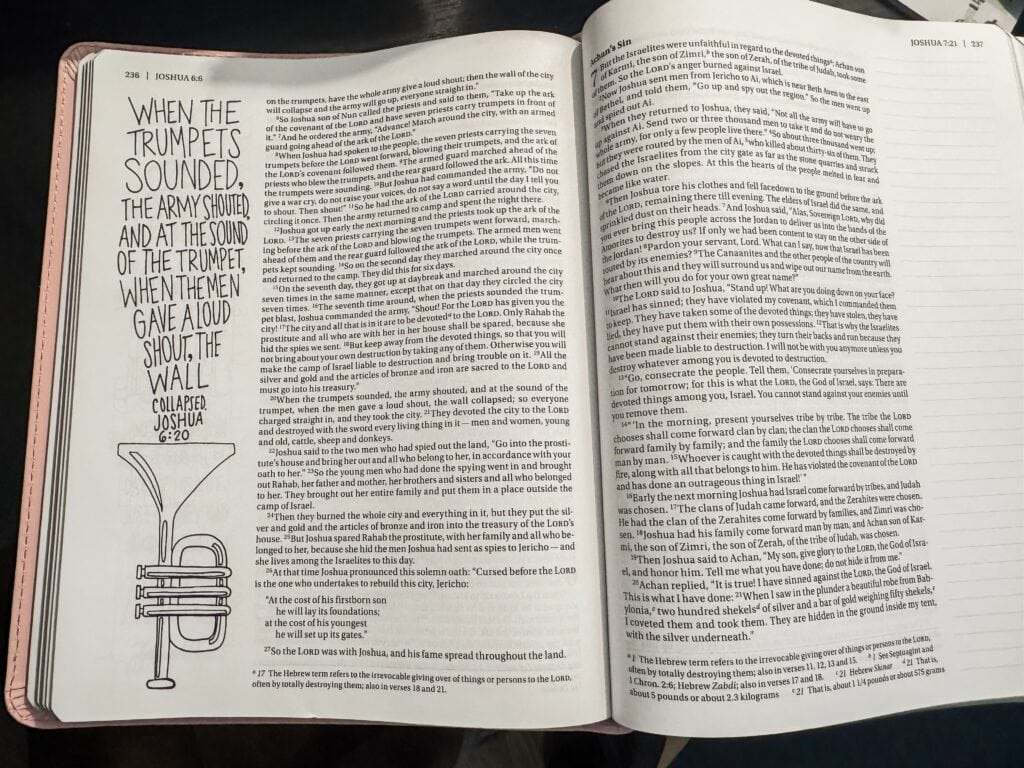
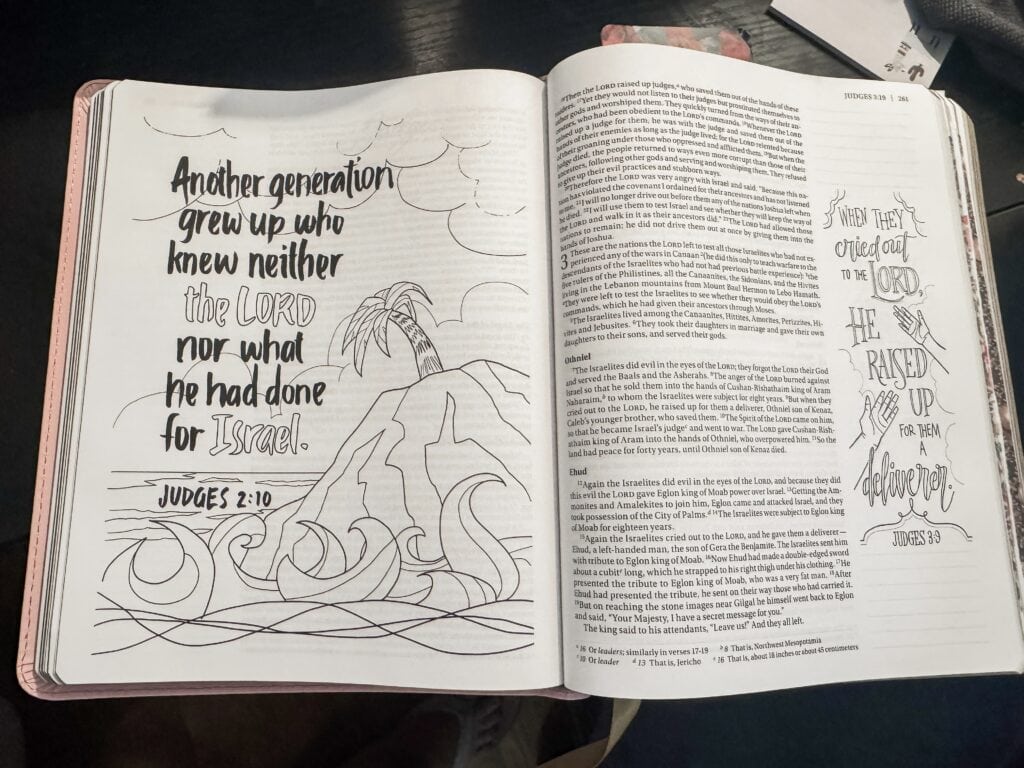
If you need more space, I found a workaround, which you also can use with a regular Bible. I’ll share that below.
Another great journaling Bible is this one … no coloring but plenty of room. This will be my next one!
Highlighters
I personally love these highlighters because they are translucent. I use them with Bible doodles a lot too, and find them subtle but eye-catching.
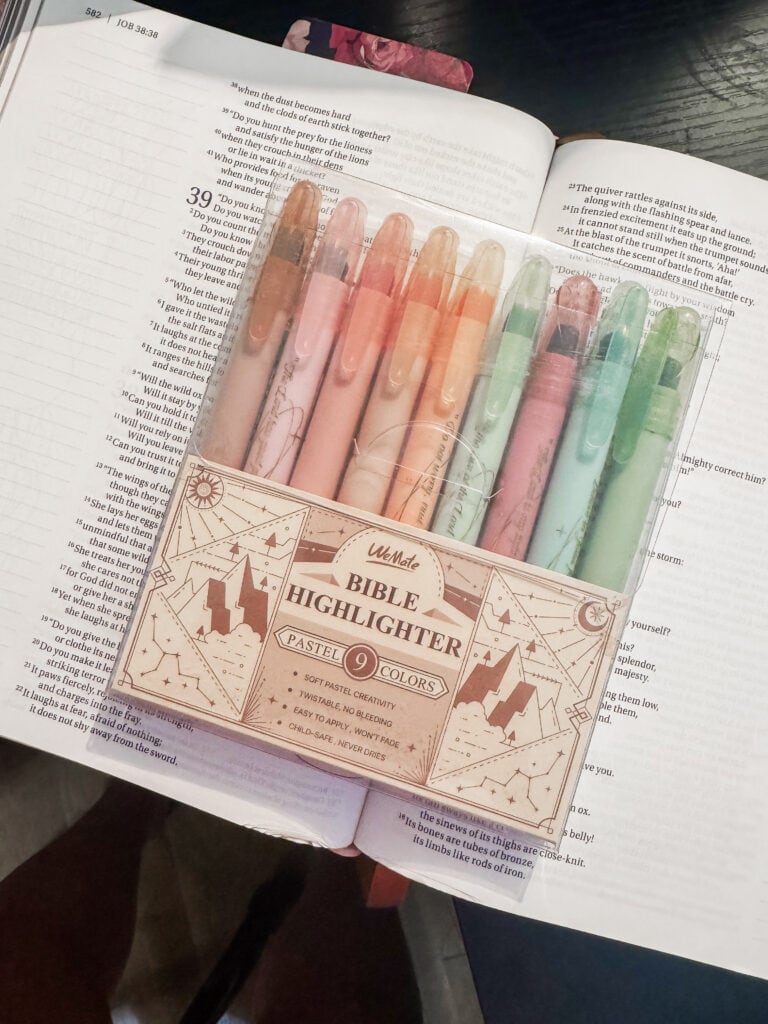
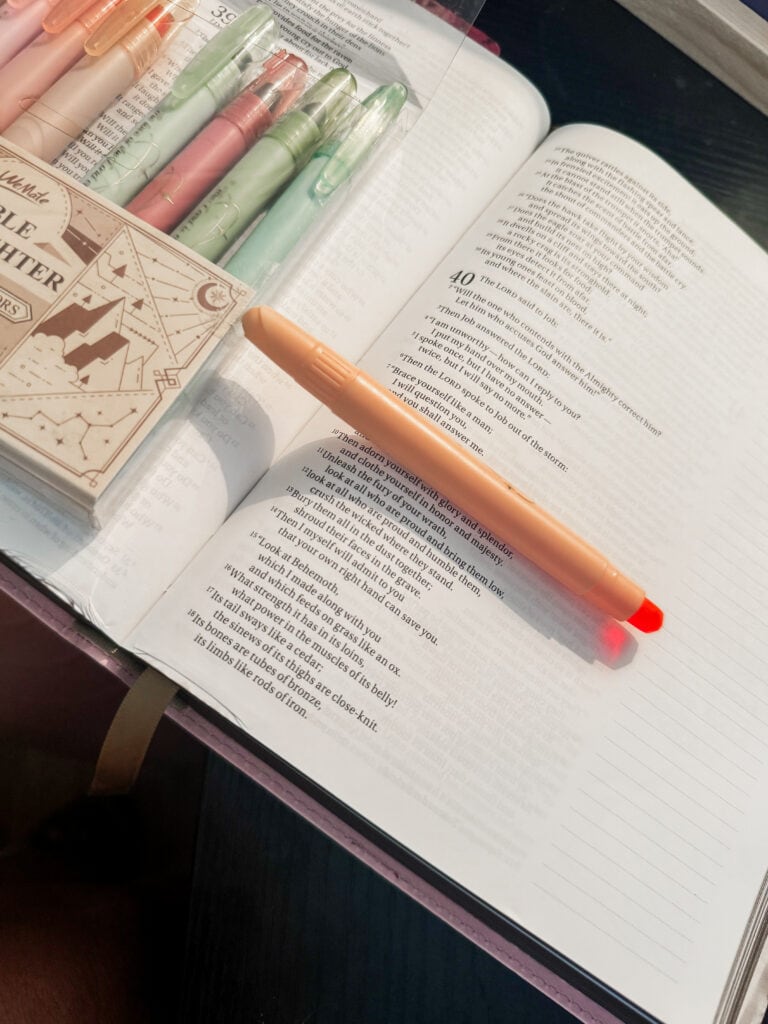
Micron Pens
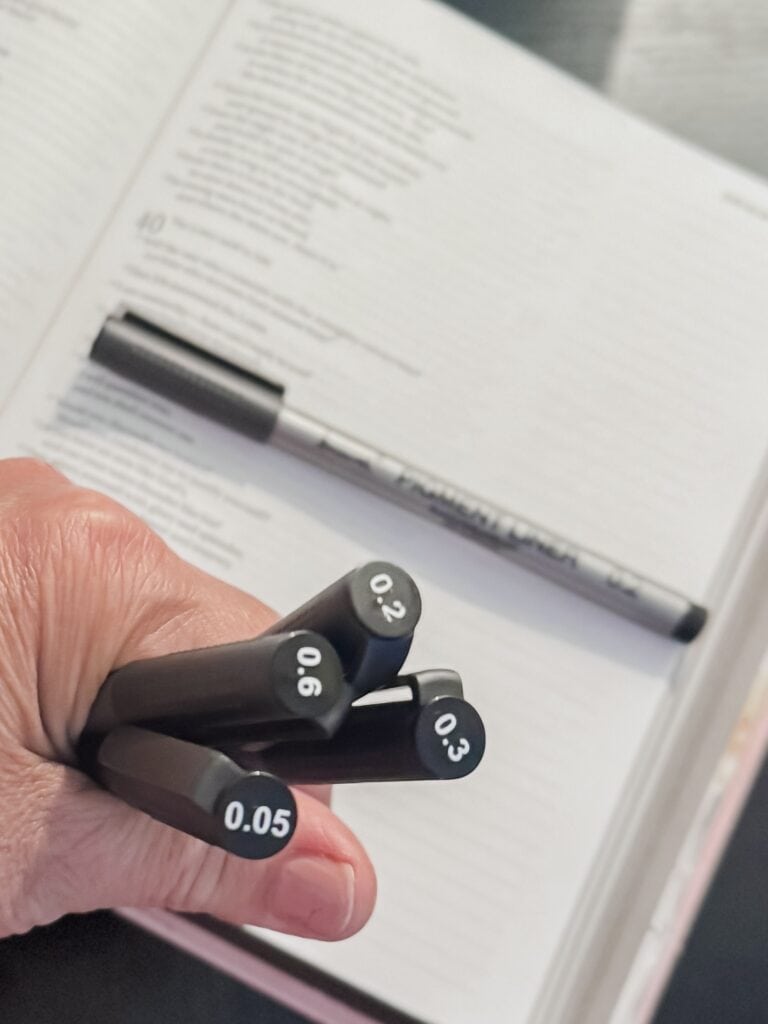
These black pens have a skinny tip and work wonderfully. Love, love, love these. They don’t bleed through the paper and are great for doodling, too! These are a great for a Bible study notebook, too. Crisp and clean!
Washi Tape
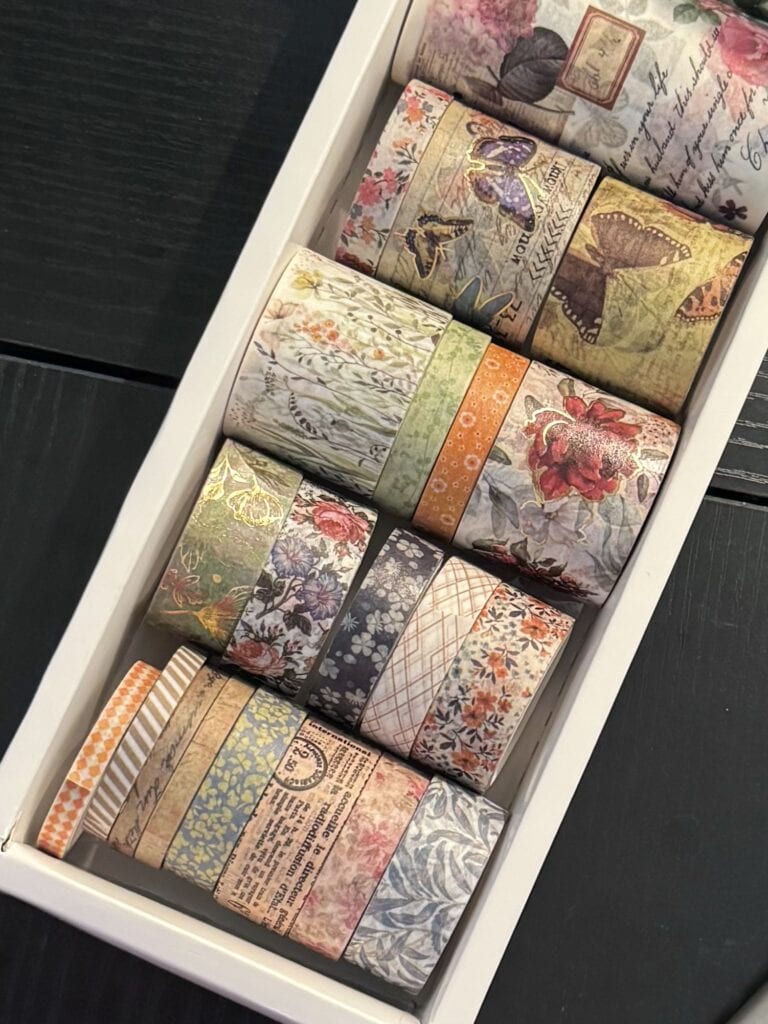
I love this mixture of washi tape because it has both thin and thick widths. There are so many pretty designs, too.
Bible Journaling Kit
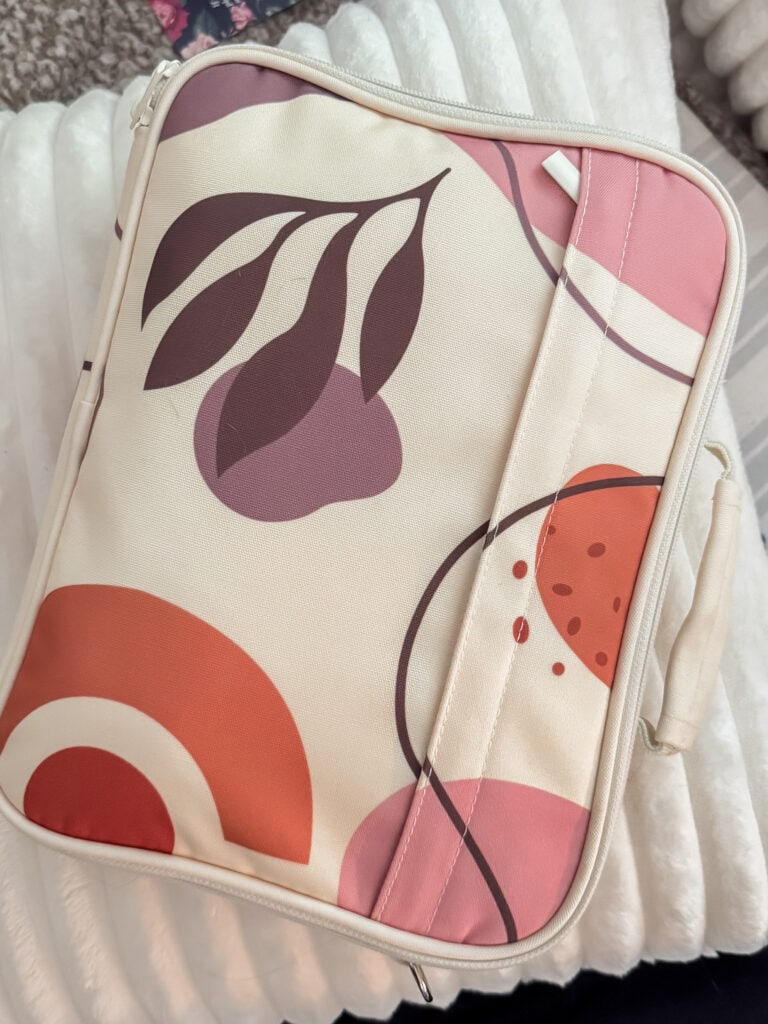
While this isn’t necessary, I do like to have a Bible journal kit to keep my supplies and my Bible in one place. This is the one I have, and I really love.
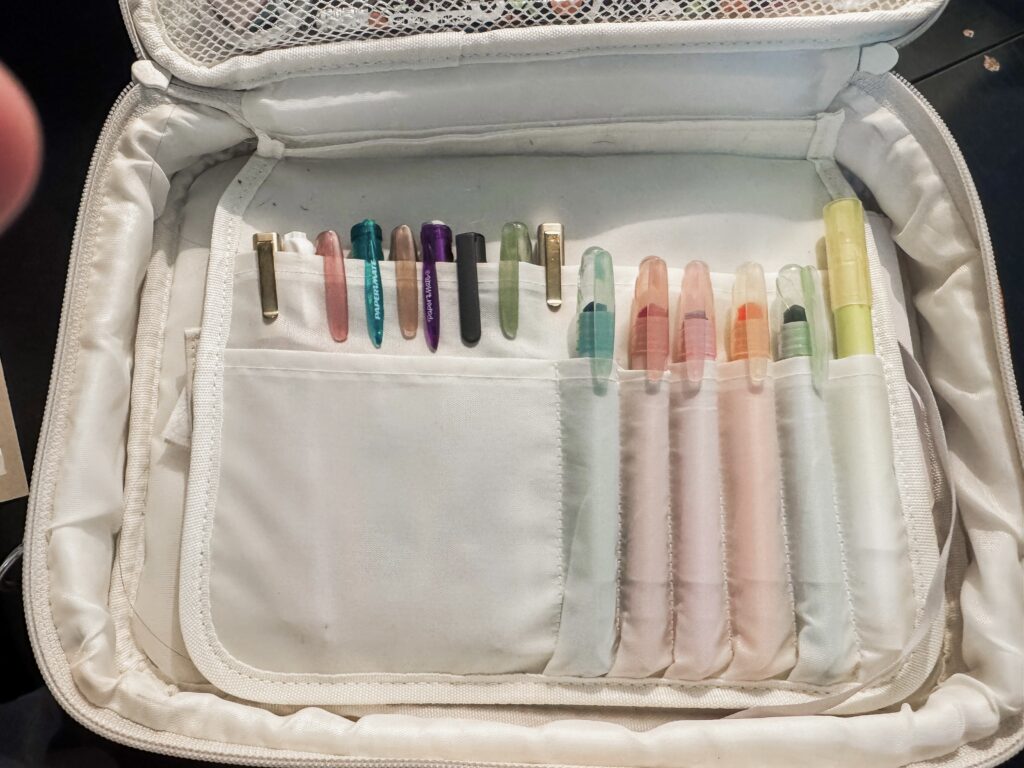
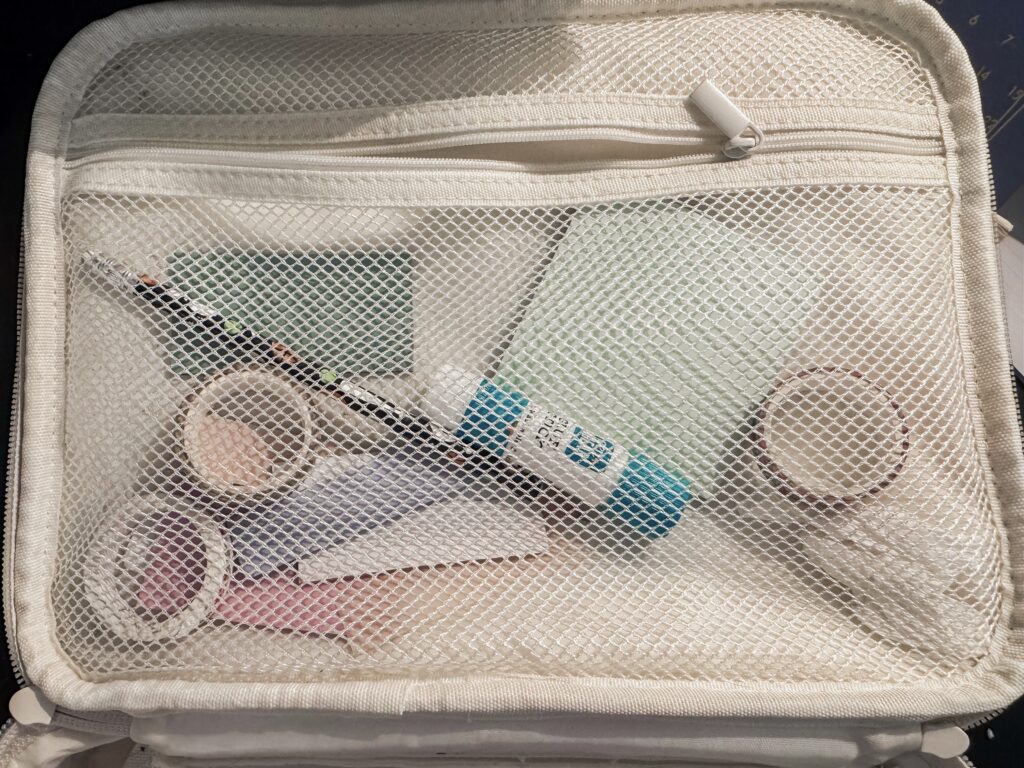
This kit also comes with bookmarks, Bible tabs, highlighters, pens, post-it notes… it’s pretty much an all-in-one set.
If you don’t want to purchase a Bible journal kit to hold all of your items, an elastic band pencil pouch is a great alternative that you can attach right to your Bible for highlighters, washi tape, and pens!
You can also check out my Amazon store which has links to all of the Bible journal supplies above!
How to Study and Journal the Bible
This is just my own personal process of how I read, study, and journal the Bible. Take from it whatever is helpful!
1| Read and mark up the text.
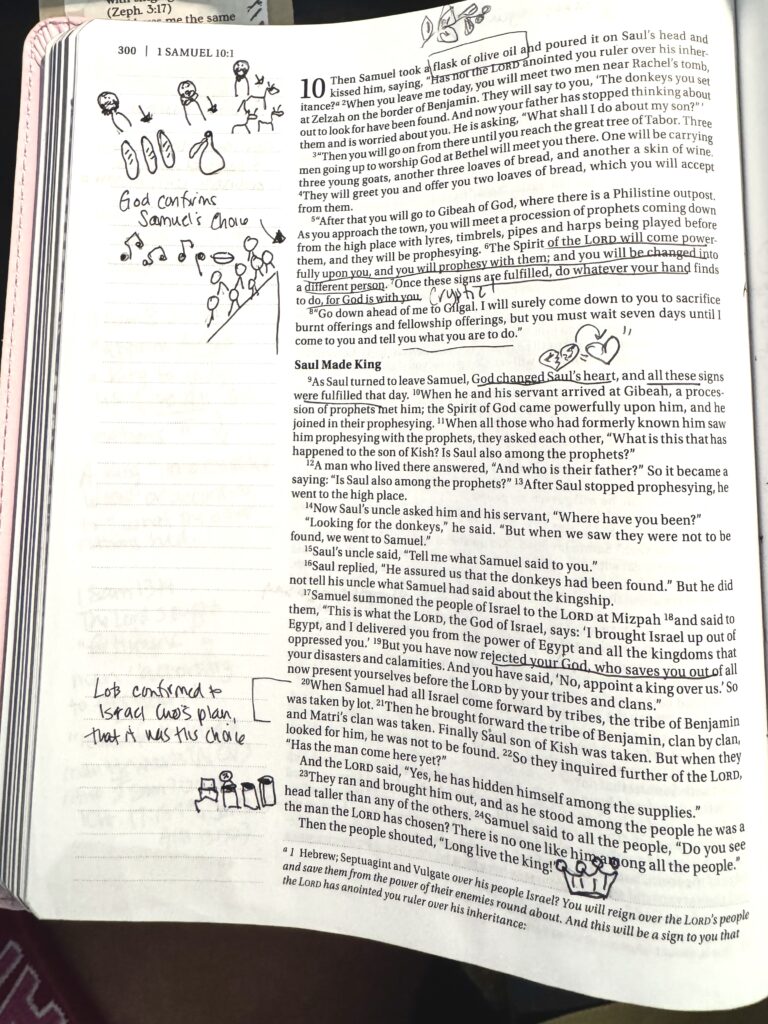
After praying, I initially do a read through of whatever text I’m studying and just underline and jot down any notes, things that stand out to me, or even questions. It’s a very ‘real-time response – question and question marks if something is puzzling, exclamation marks for something shocking, sad faces – even emojis. It’s just my own initial reactions to the text.
If I see imagery in the Bible, I like to make a little drawing of that, too.
2| Make connections
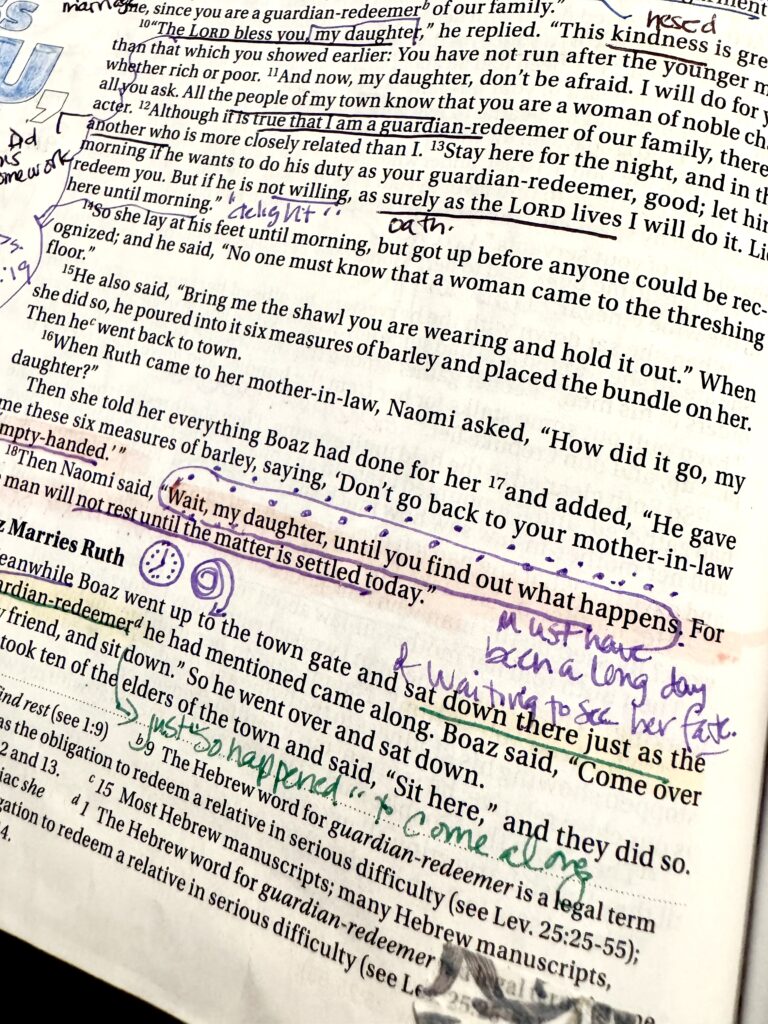
Next, I’ll comb through the reading again. It’s usually in a second read-through where I’ll start connecting the dots. Here, I begin to jot down any patterns I’m noticing, repeated words or phrases, or recurring themes.
I’ll also note if I see motifs or symbols that occur in other places in Scripture.
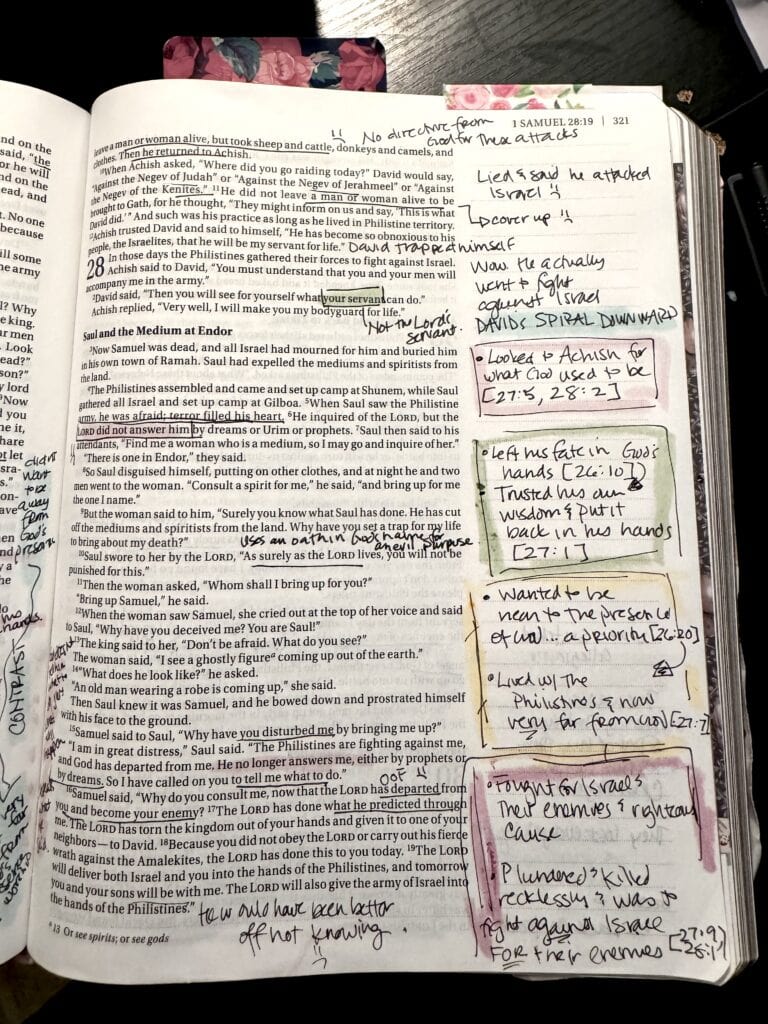
I also might write down some things I’m noticing about the actions or character of a certain person in the Bible.
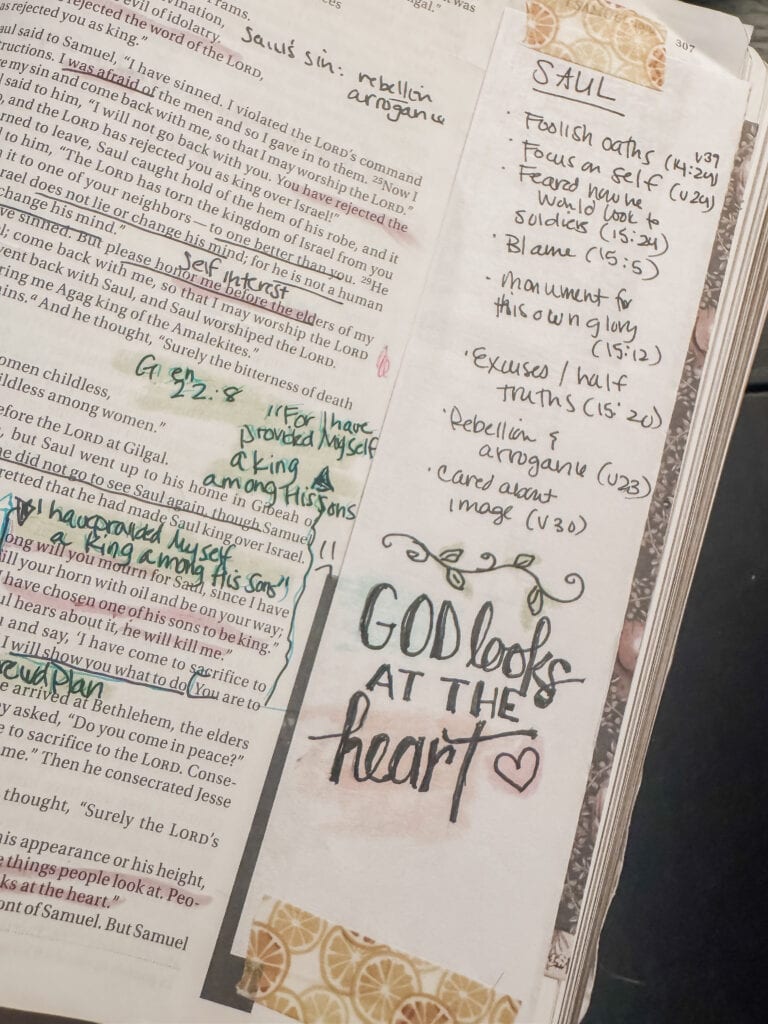
This is also where I’ll start adding symbols or doodles or diagrams to make things more concrete and visual.
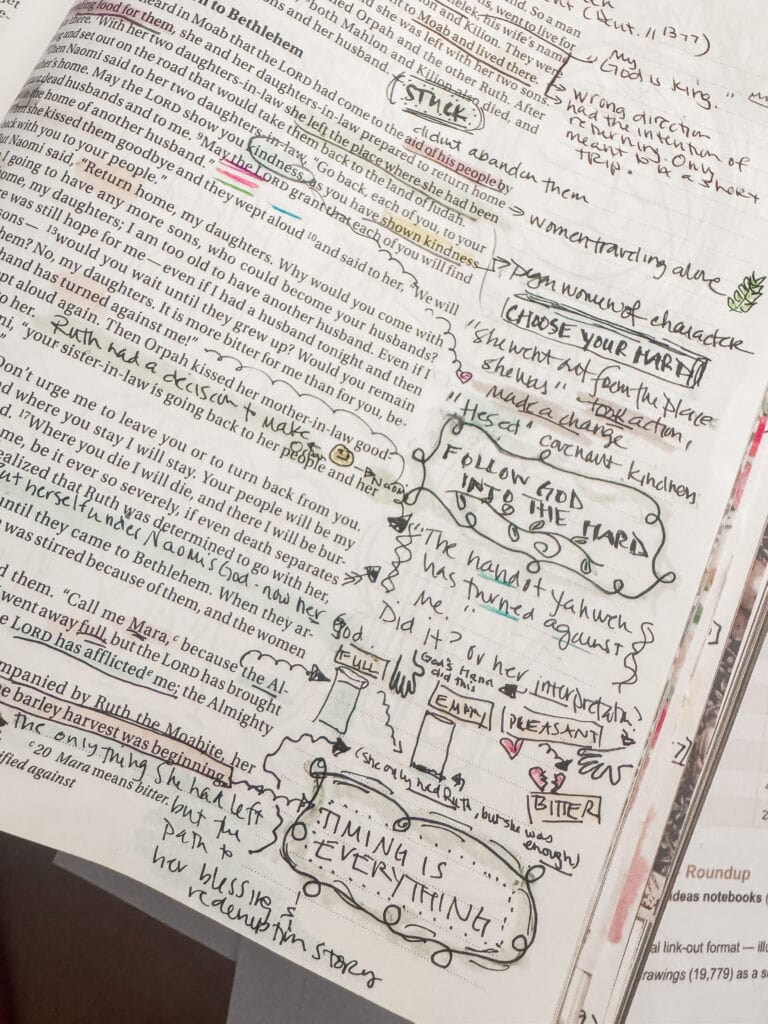
3| Go deeper
I love to go deeper. There are all kinds of resources I have on my phone to do a deep dive. And if I find something interesting, I’ll add it to my notes.
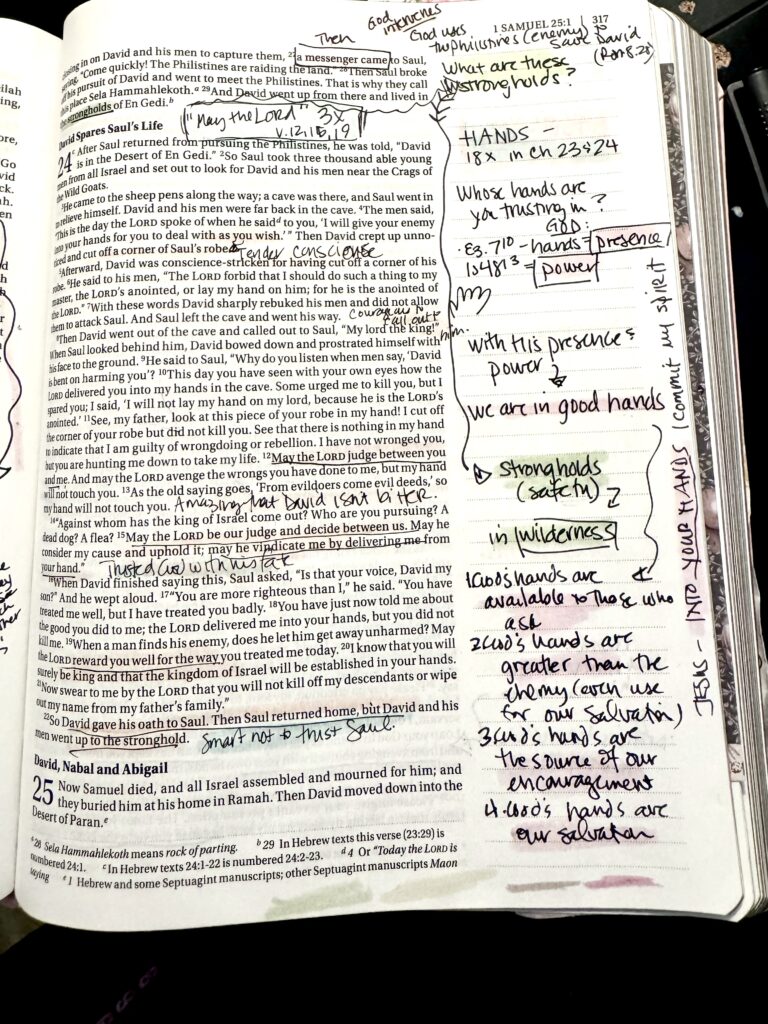
Here are some of my favorite Bible study tools.
Commentary
If I have time, I love to head to the Enduring Word (online or on the app) and read through their commentary. Excellent insights and very biblically sound. Perspectives of other theologians are also quoted, which I really love.
Concordance
Sometimes I’ll also go to Blue Letter Bible (online or on the app) and use their other commentaries or concordance if a word is jumping off the page and I want to go deeper. A lot of times, that will lead me down a rabbit trail to other Scriptures that use those same words. That’s when things really get fun and you feel like God is speaking with a megaphone. So many treasures in His word to be found that way!
Other Versions
I love using Bible Hub if I want to read one verse or passage in different versions simultaneously. You don’t need to switch versions – it’s all there on one page!
Internet
Sometimes, I’ll look up an idea or ask a question on the internet. I feel pretty certain that I’m not the first person to ever have that question! Gotquestions.org is really good for clearing up difficult passages as well as The Bible Project.
Sometimes I find an article to read or a video to watch on that topic.
I recommend going online with a caveat. There are all kinds of points of view, even among Christians! It can be a lot! I always try to find out the author’s theological stance and background, just to know what perspective he or she is coming from – and determine if it’s something I even want to read or watch at all. Definitely ask the Holy Spirit to guide you to truth and use discernment.
4| Tie it all together
By the time I’m done with all this, I need to land the plane somewhere. There’s so much to absorb – in a good way!
I read this idea once about how to boil down your Bible readings to something you can walk away with.
So here are the 2 questions I try to answer before I’m done:
1| What does this passage show me about God?
2| What are my takeaways?
Some passages can be really tough to swallow, which is why it’s so important to look for God. He’s there – not always super-obviously – but it’s amazing how His compassion and mercy can be seen, even in the toughest passages.
As for my takeaways, sometimes they are an actionable step.
Sometimes they are a universal truth about life and humanity or something to keep meditating on.
Sometimes those takeaways are a list of lessons we can learn from the passage.
To keep these truths somewhat organized, I will highlight my notes about God in blue as well as the Scriptures that pointed me to those truths.
Then, I highlight my takeaways in pink, as well as the verses that pointed me to that.
The answer to one or both of those questions will usually end up being a smaller art doodle in my Bible or something that I’ll later bring over to my faith art journal to process in a more significant way.
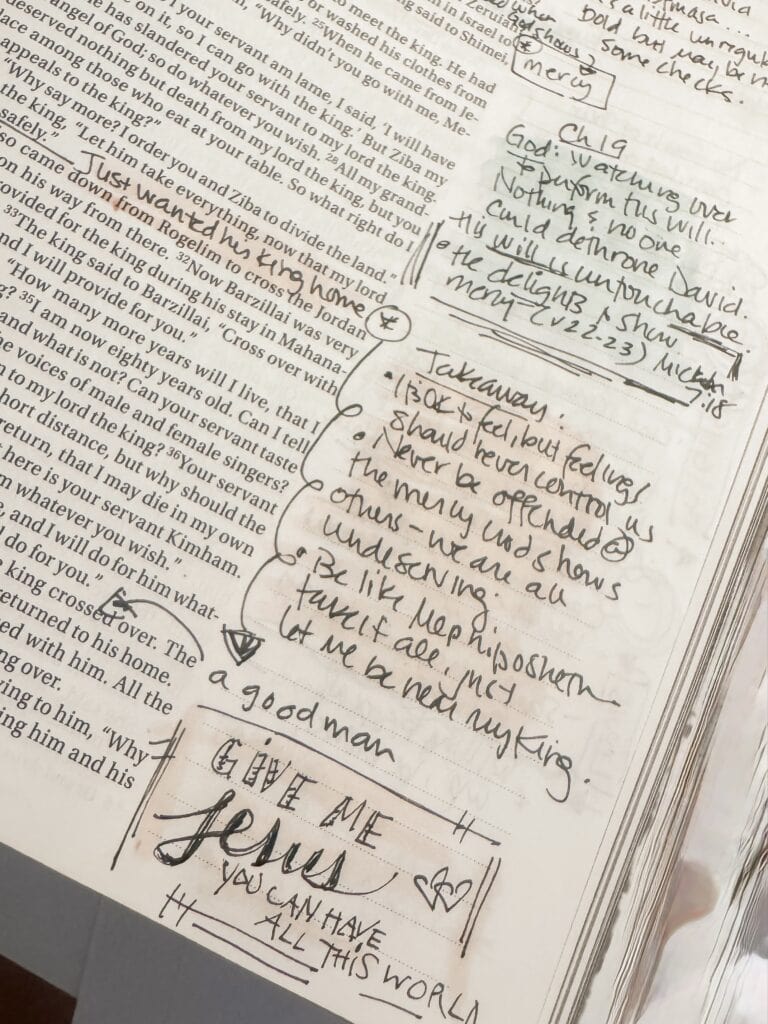
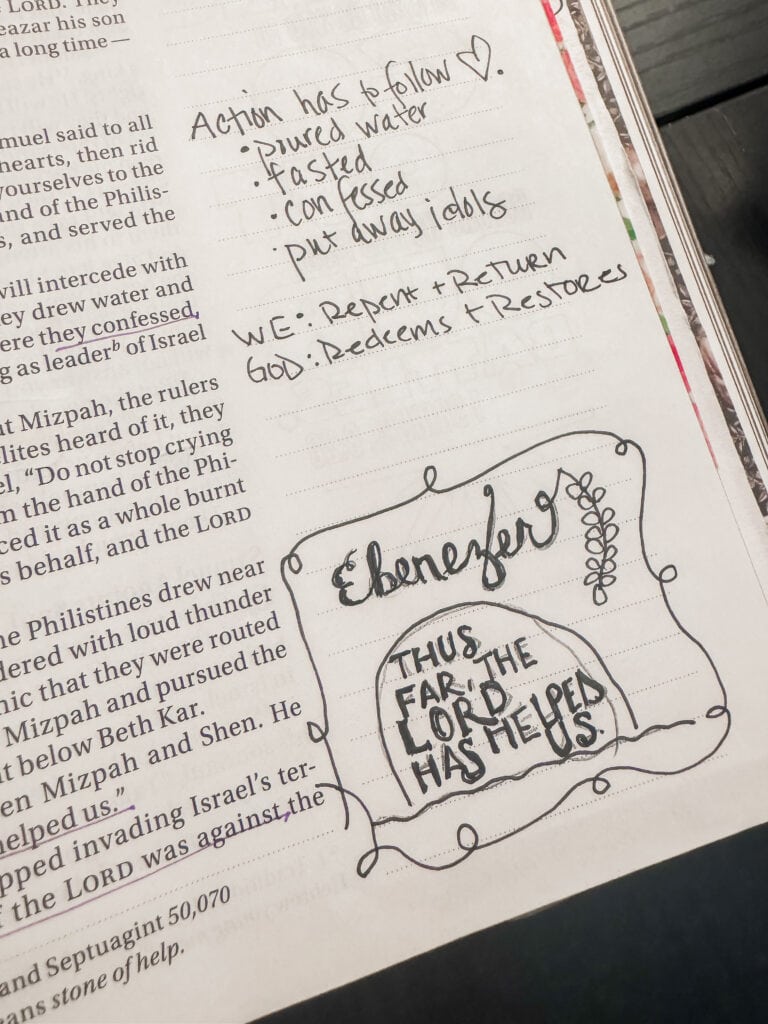
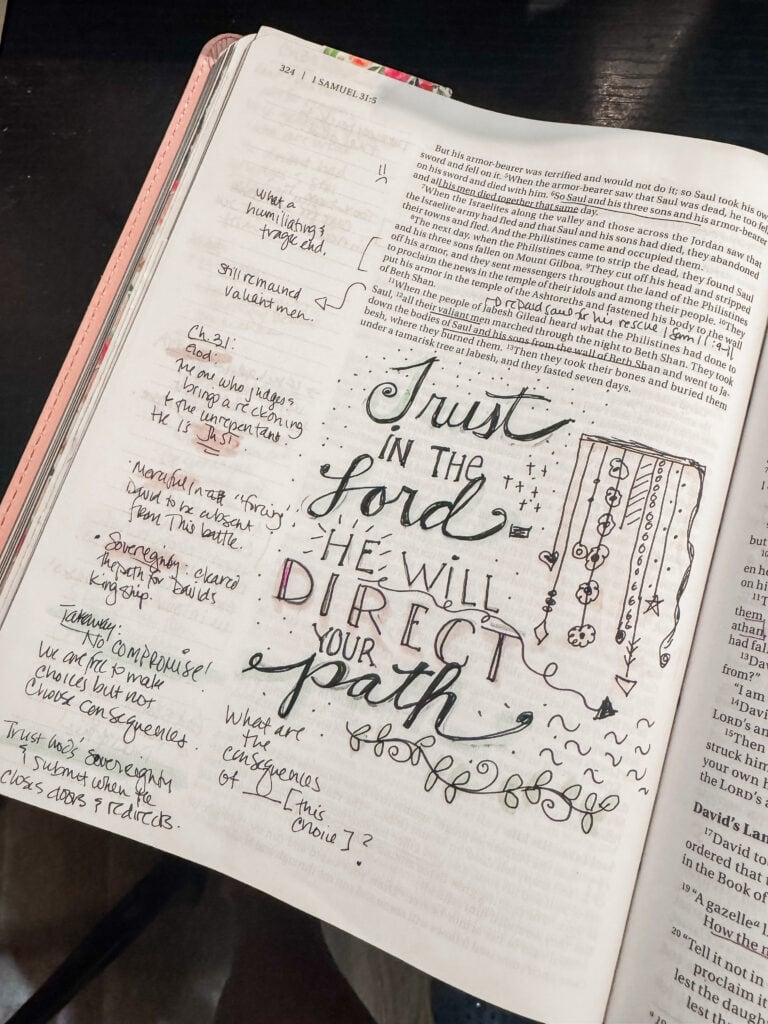
Then, I’ll just use a different color highlighter for anything else. (This isn’t a perfect system – I get my colors mixed up a lot! But color in general helps it stand out).
If I run out of room, I’ll add a Bible tip-in or tip-out.
A tip-in is just a piece of paper you attach into the center of your Bible with double-sided tape or washi tape.
A tip-out is a piece of paper that you attach to the outside edge of the page.
I generally prefer tip-outs! They are great to add if you need more room to journal or take notes, especially if there’s a coloring picture in the margin!
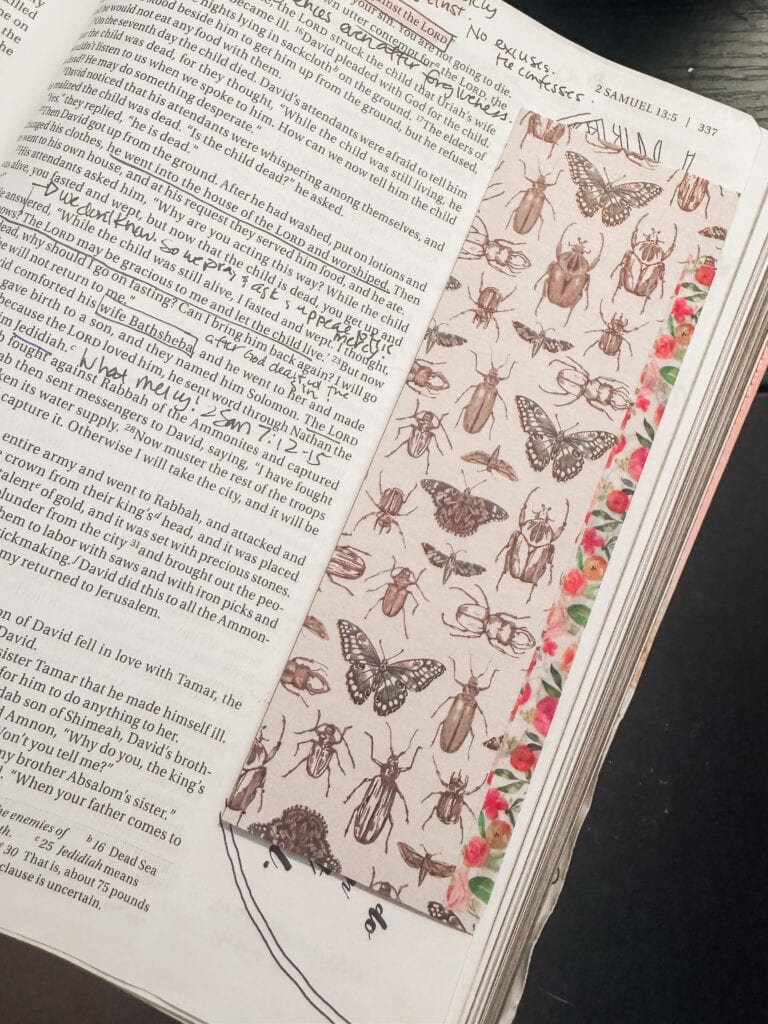
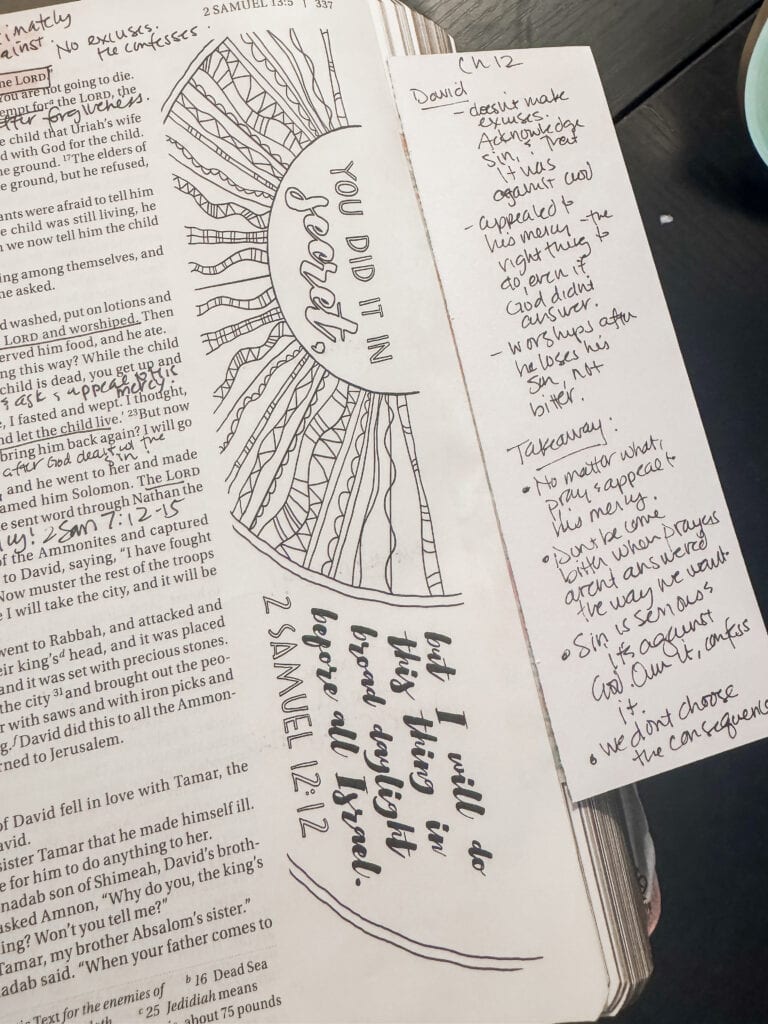
How I Incorporate Bible Art Journaling
As I mentioned above, I do keep a separate faith art journal, where I’ll include some of the things God spoke to me during my quiet time. Here’s how that comes into play.
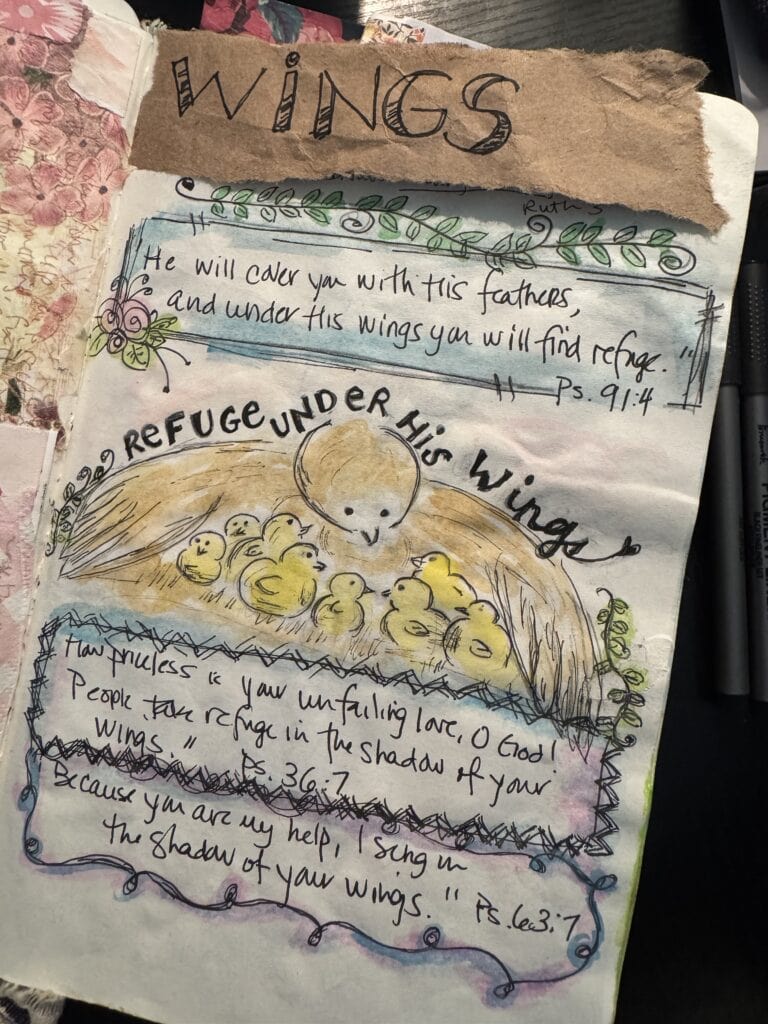
If there’s a truth I really feel like God is driving home and wants me to remember – like those light-bulb, epiphany revelations, that’s something I’ll put into my Bible art journal.
You can see an example of that below.
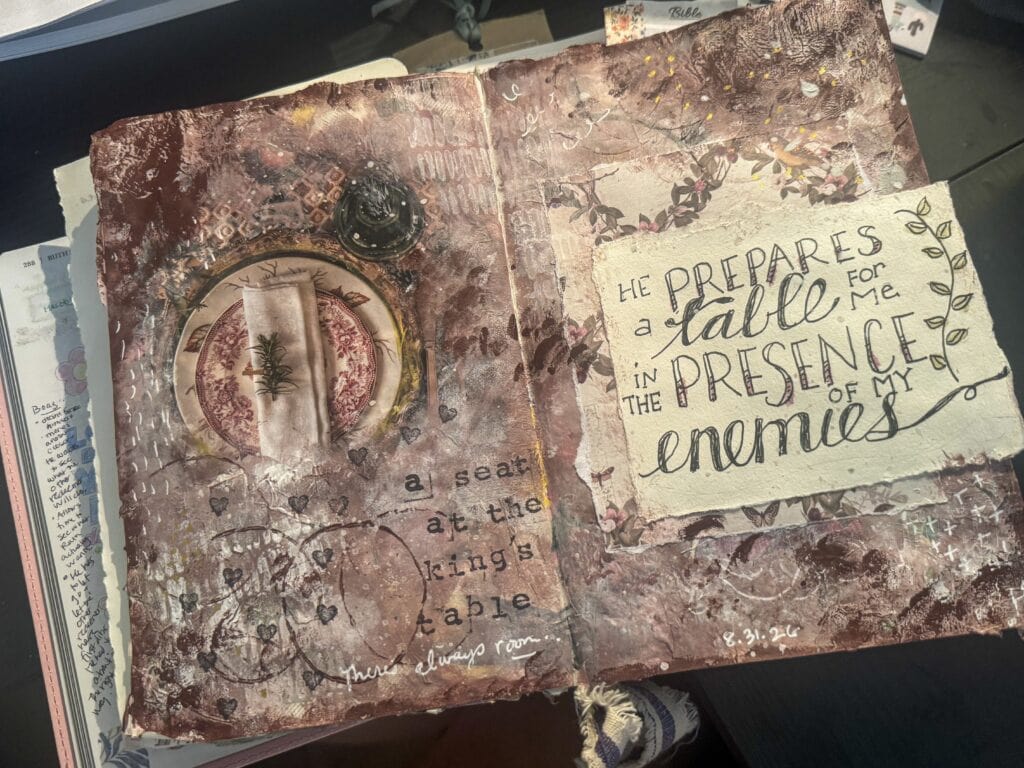
For me, my art journal serves 3 major purposes:
1| Creating the art itself helps me process the truth and remember it better. That hands-on, kinesthetic approach is one of the best ways to solidify a concept. When I was a teacher, I saw this to be the case just about 100% of the time.
2| An art journal is something I can easily flip through in the future to be reminded of those truths. For me, it’s better than a journal with words because it takes so much reading to locate those nuggets of gold God shared.
In an art journal, besides being something that I loved creating as art, I can land on those truths much more quickly and easily.
3| It’s an artistic record of my encounters with God. I love the whole process of art and creation, but it’s so much more meaningful when it has a spiritual significance. It’s art with a purpose, and there’s nothing better to create than this history of me and God and what He’s spoken to me.
Free Bible Journaling Printables
If you don’t have a journaling Bible or you just want to have a little extra space to take notes, I created these free Bible journaling templates you can use. It’s a 2-page PDF with 2×7″ tip-outs.
It has a space to note what you learn about God, your takeaways, and other thoughts.
There’s also a blank lined version to use whatever way you like – they are also great for sermon notes!
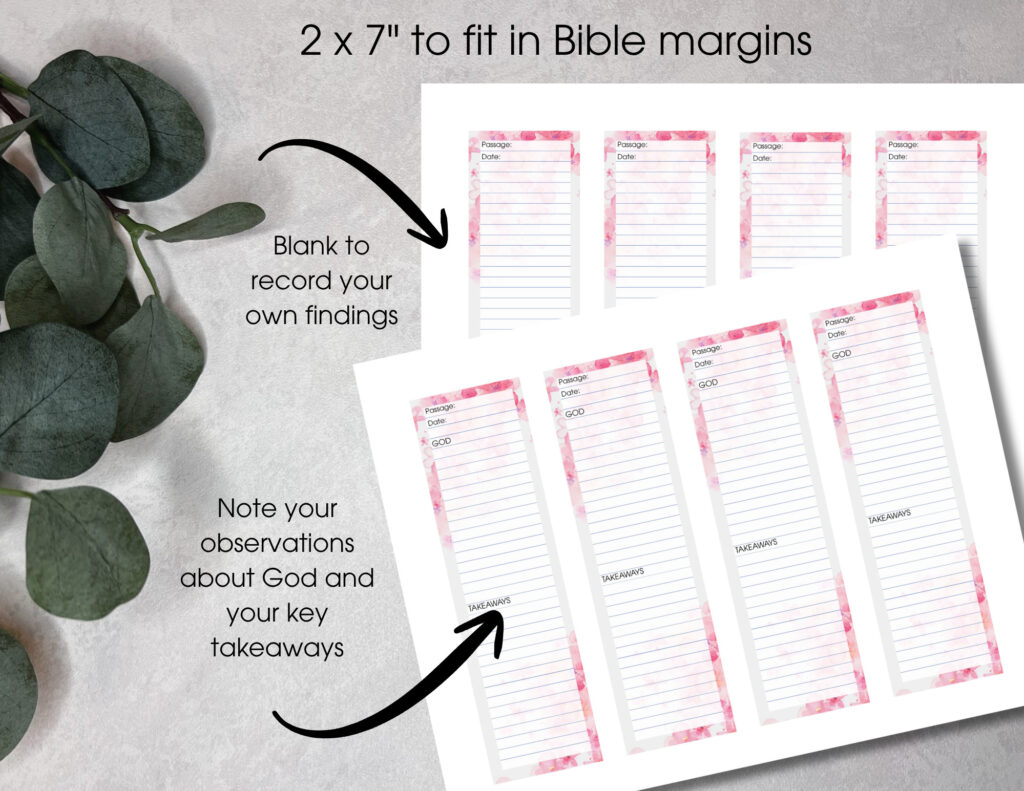
Print them out, cut them up, and stick them in your Bible (I like to create a corner pocket in the back of my Bible to store them in!).
Just fill out the box below to grab the printable. I personally like to use copy paper and not cardstock. Sometimes cardstock is heavy when it’s taped on one edge only.
I hope you found this post helpful! It is so my prayer that your time with the Lord will exponentially become more impactful to your heart and life as you begin engaging with Him and His Word in this new way!
Bible Journaling for Beginners: FAQ
Where should I start reading when I’m new to Bible journaling?
Start with a book that’s short enough to finish. A few beginner-friendly places:
- Psalms: a psalm a day gives you tons of imagery for doodles, and the poetry layout leaves more margin space.
- A Gospel (Mark or John): you get to know Jesus first, and Mark’s short chapters make it easy to stay consistent.
- Ruth: only four chapters, with a beautiful story of God’s faithfulness. It’s where my “under His wings” page came from!
- Genesis: full of stories and symbols that connect to the rest of Scripture.
My best advice is to pick one book and read it straight through, rather than jumping around. You’ll start noticing repeated words and themes, and that’s when journaling gets really good.
Do I need art skills to Bible journal?
Not at all! Bible journaling for beginners can be as simple as highlighting, underlining, and jotting notes in the margin. Little doodles like a crown, a heart, or a simple tree are plenty. Remember, it’s about time with God, not a perfect page.
Do I need a journaling Bible?
No, but it helps. A journaling Bible has wider margins (usually 2″), so you have room to write and draw. If you’re using a regular Bible, tip-ins and tip-outs give you extra space without writing on thin pages. My free tip-out printable below works in any Bible.
What pens won’t bleed through Bible pages?
Micron pens are my go-to because the fine tip doesn’t bleed. Translucent Bible highlighters are also made for thin pages. Before using anything new, test it on the bottom corner of a page. A faint shadow is normal, but if ink soaks through to the other side, save that pen for your notebook. For more on supplies and styling, see my Bible journaling aesthetic post.
How long does Bible journaling take?
As long as you have! Some days it’s 10 minutes with a highlighter and a quick note. Other days I spend an hour going deeper with commentaries and adding a doodle. Consistency matters more than time, so a few minutes most days will do more than one long session a month.
What’s the difference between journaling in your Bible and a Bible journal notebook?
Journaling in your Bible keeps your notes right next to Scripture, so you see what God showed you every time you turn to that page. A notebook gives you more room for art, collage, and processing big truths. I do both! Here are my Bible journal notebook ideas if you want to try one.
More in the Bible Journaling Series
15 Bible Journaling Ideas for Your Notebook – full of Christian notebook ideas!
Bible Journaling Aesthetic: 7 Ways to Style Your Bible and Notebook
I’d love to hear how it’s going! Feel free to drop me an email and let me know! Kate@ahundredaffections.com
Other thoughts? I’d love to hear them! Leave a comment below!
Pinterest user? If you found this post helpful, I’d be so grateful if you pinned. Every pin supports this site in a big way. Thank you so much!


Thank you! This was Inspiring! Love from Sara, Sweden
I’m so glad you enjoyed it, Sara! Thank you for letting me know! Pray you have wonderfully blessed times in your study of Scripture and with the Lord!